The short answer: a well-protected yacht does not rely on one clever gadget. It combines four layers: something that discourages a visitor, something that detects one, a way to confirm what is happening, and a clear plan for who responds. This guide explains how video surveillance, perimeter detection, access control, alarms and cybersecurity fit together on a yacht, what to look at in each layer, and how to keep the system working when the owner is away from Mallorca.
In this guide
- Why yacht security is different from home security
- The four layers of yacht security
- Video surveillance on board
- Perimeter detection
- Access control
- Alarms, monitoring and remote control
- Cybersecurity for yacht networks
- Security when the owner is away
- Installation and maintenance
- Checklist for owners and captains
- Frequently asked questions
Why yacht security is different from home security
A house stays where it is. A yacht moves, swings on its mooring, sits next to other boats and spends long stretches without anyone on board. Salt, humidity, vibration and constant power fluctuations are hard on electronics, and a berth is open to the pontoon, to neighbouring crews and to the water itself.
The risks are also different. Besides theft of tenders, outboards, electronics and personal belongings, owners worry about unauthorised boarding at the dock, intrusion while the boat is laid up, fire, flooding and, more and more, attacks on the vessel’s network. A system designed for a villa will usually fail within a season on a boat. That is why yacht security starts with an honest look at how the boat is really used: where she is berthed, how many people have keys, how often someone visits, and what is on board that is worth protecting.
The four layers of yacht security
Professional security plans are built in layers, so that if one layer fails the next one still works.
- Deter. Visible lighting, signage, locked tender garages and a boat that looks attended make a casual intruder think twice.
- Detect. Sensors and cameras notice that something has changed: a person on the swim platform, a hatch opened, water in the bilge.
- Verify. Video, audio or a visit from a person confirms whether the alert is real. This is what stops false alarms from becoming a nuisance.
- Respond. Someone must know what to do and be able to act: the captain, a gardiennage team, the marina, the owner’s security contact or the emergency services.
Most weak systems fail at the last two layers. They detect, but nobody checks the alert, or nobody is close enough to act on it. We come back to this in the section on absences.
Video surveillance on board
Modern marine cameras are far better than the basic units of a decade ago, but the choice of equipment matters less than the choice of positions. Think first about what you need to see, then pick the camera.
What to cover
- The boarding point: passerelle, swim platform and side doors.
- The tender garage, lazarette and any storage where valuable equipment is kept.
- The helm station and the main salon entrance.
- The engine room, to document problems as well as intrusions.
- The dock side of the vessel, as far as local privacy rules allow.
Choosing the right camera
- Fixed HD or 4K cameras give reliable coverage of a defined area and are the right base for most yachts.
- PTZ cameras (pan, tilt, zoom) cover large areas and follow movement, but need maintenance because of their moving parts.
- 360-degree cameras reduce blind spots on a flybridge or sundeck.
- Thermal cameras detect heat signatures in darkness, fog and rain. They are the best choice for spotting a person approaching, though they show little detail about who it is, so many owners pair them with a normal camera.
- Low-light and infrared models are essential for night time at anchor or in a marina with poor lighting.
Practical points that are often missed
Use marine-grade housings with stainless or sealed fittings, because standard outdoor cameras corrode quickly. Make sure recording is stored on board and, ideally, copied to a second location, since an intruder who takes the recorder takes the evidence. Look at how much bandwidth the remote view uses on a satellite or 4G link, and agree who is allowed to see the live image. Finally, remember that cameras recording people, such as crew or guests, are subject to privacy rules. Tell the crew, put up clear signs where required and keep cameras out of private cabins and bathrooms.
Perimeter detection
Perimeter detection tries to notice a person before they are on board. It is the layer that gives you time, and it is the one searched most often by yacht owners, because the problem is hard: a boat moves, so the area to watch moves with her.
Technologies in use
- Infrared beam barriers. Invisible beams form a virtual fence around the boarding area or the deck. When someone crosses the beam, the system raises an alarm and can switch on lights or start recording.
- Radar-based detection. Compact radar units watch a wide area around the vessel and keep working in rain and mist, where optical systems struggle. They suit larger yachts or boats on anchor.
- Video analytics. Software on the cameras recognises a person or a boat in a defined zone and ignores birds, waves and reflections. The quality of the analytics decides how many false alarms you will get.
- Pressure and contact sensors. Pads, door contacts and hatch switches report physical entry at the points where someone must pass.
- Thermal detection. A thermal camera with analytics can both detect and classify a heat source at a distance.
The false-alarm problem
A system that sounds every time a wave slaps the hull will be switched off within a week. Good design sets different zones for berth and anchor, lets you change sensitivity depending on sea state, and uses two detection methods that must agree before the system calls someone. Ask for a demonstration in the real conditions of your berth, not in a showroom.
Access control
Many incidents are not forced entries at all. They happen because a key was copied, a code was shared or a contractor left a door open. Access control puts rules around who can go where and when.
- Electronic locks with codes, cards or phone credentials let you give each person their own access and withdraw it without changing a lock.
- Zones. Guests, crew, captain and contractors rarely need the same doors. Restrict engine room, crew areas and technical spaces separately.
- Time limits. A temporary code for a surveyor, cleaner or technician that works only on the day of the visit is much safer than a spare key.
- Logs. A record of who opened what and when is valuable after an incident and also discourages careless use.
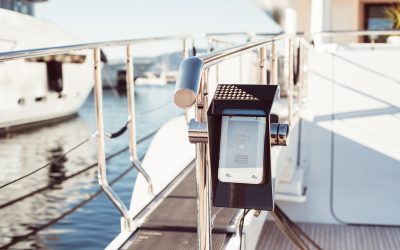
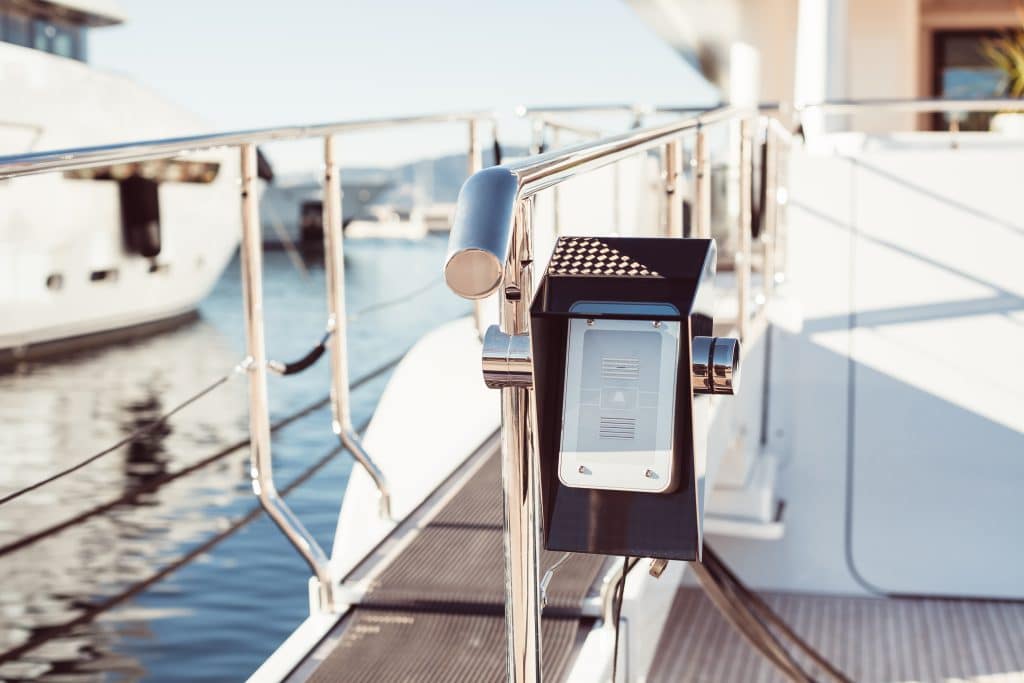
- Video intercom at the passerelle lets the crew see and speak to a visitor before opening.
- Mechanical backup. Always keep a key or manual override for emergencies and for the case when the batteries are flat.
Whatever you choose, decide who is the administrator, how access is withdrawn when someone leaves the crew, and where spare credentials are kept. A good system with careless management is no better than a padlock.
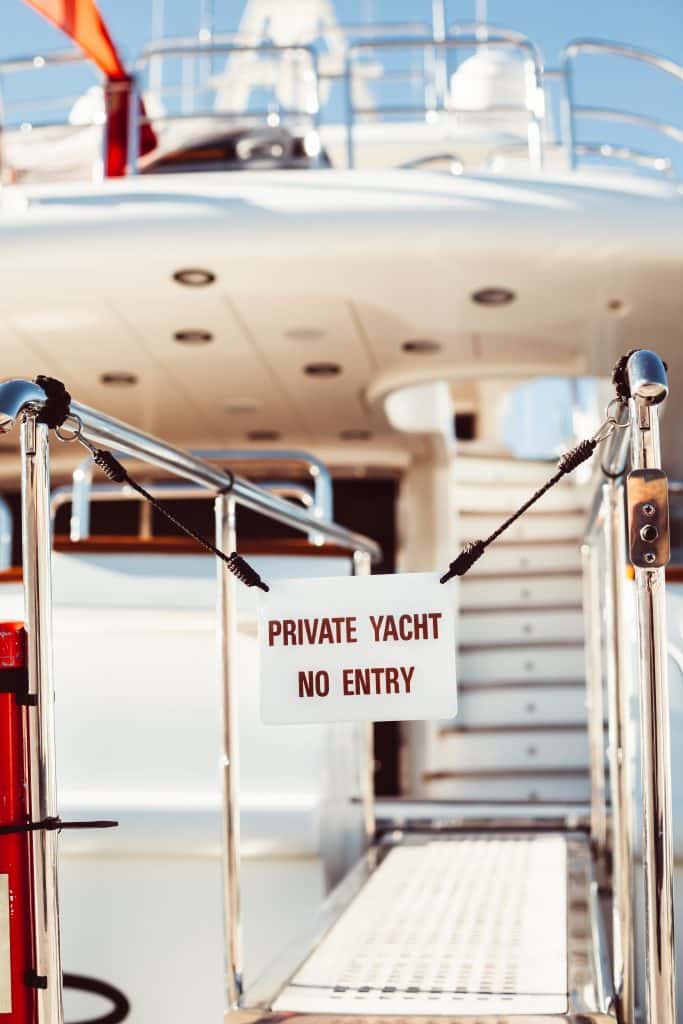
Alarms, monitoring and remote control
An alarm is only useful if the right person finds out quickly and can do something about it. On a yacht the alarm panel should cover more than intruders.
- Intrusion alarms tied to door, hatch, window and motion sensors.
- Technical alarms: high water in the bilge, loss of shore power, low battery voltage, high temperature in the engine room, and bilge pump activity. These are the early signs of the problems that sink boats at the dock.
- Geofencing. If the boat leaves a defined area without authorisation, an alert is sent. It is useful against theft of the whole vessel or the tender.
- Remote control by app. Owners and captains can arm and disarm, see the cameras and receive notifications from anywhere. Make sure the app uses a proper login, preferably with two-step verification.
- Several contacts. Alerts should reach more than one person, with an agreed order, so that the night alarm does not depend on a single phone being switched on.
- Fire and smoke detection with heat sensors in the engine room and galley, connected to the same alert chain.
Cybersecurity for yacht networks
Cameras, locks, navigation systems, entertainment and crew devices now share the same network on many yachts. That is convenient, but it also opens a door that has nothing to do with the physical hull.
- Separate networks. Keep guest Wi-Fi, crew devices, security cameras and navigation or engine systems on different networks, so that a compromised phone cannot reach the equipment that matters.
- Change default passwords. Cameras and routers shipped with factory credentials are the easiest target of all.
- Update firmware. Installers often set up a system and leave. Schedule updates, especially for cameras, routers and satellite terminals.
- Control remote access. Use a VPN or the manufacturer’s secure service, not open ports on the router, and review who has an account.
- Back up configurations so that a failed or hacked device can be replaced quickly.
- Be aware of GPS interference. Jamming or spoofing of satellite signals has been reported in several sea areas, so keep paper charts, a second position source and trained crew as a fallback.
- Train the people. Phishing messages sent to the crew, such as a fake marina invoice, remain the most common way in.
Security when the owner is away
For most owners, the real risk is the long stretch when the boat is empty: winter, a summer spent elsewhere, a refit period. This is where the layers “verify” and “respond” matter most, because the sensors only help if a person can check what happened.
At PSB Marine we look after boats whose owners are not on the island. Our boat gardiennage service in Mallorca means engineers and cleaners visit the yacht on a regular schedule, check the hull, mooring lines, shore power, batteries, bilges and ventilation, and send a report with photos and videos by email or WhatsApp. We add extra checks after storm warnings, and we can hold keys and coordinate access for surveyors, insurers or contractors, so there is a single point of control over who goes on board.
If the boat is going to be out of the water, our indoor winter storage in Santa Ponsa adds a further layer: a closed shed with 24/7 CCTV, fire prevention systems and restricted access, with every boat covered by comprehensive insurance, according to the details published on that page. For tenders and smaller craft, see our yacht tender services.
Whoever looks after the boat, write down the routine: how often she is visited, who is called first if an alarm triggers, who has authority to approve a repair, and who is allowed on board. Those four answers matter more than the brand of the equipment.
Installation and maintenance
Security equipment is only as good as its installation. Cable runs, power supply, backup batteries and the position of every sensor affect reliability. If you are planning work on board, the best moment to add or upgrade security wiring is during a yacht refit, when panels and trunking are already open. Our yacht management service covers the planning and the follow-up, and our engineers work on the electrical and electronic systems of yachts every day.
If you are about to choose equipment, our practical article on how to plan yacht surveillance, perimeter detection and access control goes through zones, detection methods and the mistakes to avoid.
For ongoing care, ask your installer for a maintenance plan: test sensors and alarms at least once per season, clean camera lenses and housings, check backup batteries, review user accounts and update firmware. If you want to discuss what you have on board and what to improve, you can contact our team or ask for a quote. For a wider view of onboard electronics, see our article on technology for luxury yachts.
Checklist for owners and captains
- Do we know who has keys, codes or app access, and is the list up to date?
- Are boarding points, tender garage and technical spaces covered by camera or sensor?
- Is recording stored in more than one place?
- Do technical alarms (water, power, temperature) reach more than one person?
- Are guest, crew and equipment networks separate, with changed passwords?
- Is someone visiting the boat regularly while she is empty, with a written report?
- Is there a written plan for who responds to an alarm at night?
- Have we tested the system this season and asked the insurer what they require?
Frequently asked questions
What is the best security system for a yacht?
There is no single best system. The right combination depends on the size of the yacht, where she is berthed, how often she is used and how many people have access. A typical setup combines cameras at the boarding points, door and hatch sensors, technical alarms for water and power, access control and a person who checks alerts quickly.
What is the difference between perimeter detection and video surveillance?
Perimeter detection tries to notice a person approaching or crossing a boundary, using beams, radar or sensors. Video surveillance records and shows what is happening. The best results come from combining both, so an alert can be confirmed on a camera before anyone is called.
Can I watch my yacht remotely?
Yes, if the cameras are connected to a network with internet access, through the marina Wi-Fi, a 4G router or satellite. Use a secure connection with two-step verification, and check the data use of the video stream if you rely on a limited plan.
How do I prevent false alarms from the movement of the boat?
Choose systems that allow separate settings for berth and anchor, adjustable sensitivity and a second form of detection that must confirm the first. Test the system in the real berth, in different sea conditions, before accepting the installation.
Do I need thermal cameras?
Not on every boat. They are most useful for larger yachts, boats at anchor or berths with poor lighting, where they detect people in darkness, fog or rain. Many owners combine one or two thermal units with standard cameras for identification.
How can I protect the yacht’s network from hackers?
Separate guest, crew, security and navigation networks, change all default passwords, keep firmware updated, avoid open ports and use two-step verification on the remote apps. Also train the crew to recognise fake emails and invoices.
What security should I arrange when I am not on the island?
Arrange regular visits by qualified people who report back with photos, agree who responds to alarms, control who is given access, and consider indoor storage for the winter. A gardiennage service combined with a good alarm panel covers most of the risk of an empty boat.
Does the insurer ask for specific security measures?
Policies differ. Some require certain alarms, a monitored berth or a safe storage place for tenders, so check the conditions with your broker or insurer before you invest in equipment or change how the boat is kept.
Talk to PSB Marine
PSB Marine is a family company with more than 30 years of experience looking after yachts in Mallorca, with bases in Puerto Portals and Santa Ponsa. If you want advice on how to keep your boat safe, whether she is in the water, in storage or under refit, write to info@psb-marine.com, call us on 971 234 522 or use our contact page.